The New Frontier of SEO: Why AI Optimization Is About Intelligence, Not Automation
Topic: Clearscope
Published:
Written by: Bernard Huang
For the past two decades, SEO was a game of execution: find the keywords, produce the pages, earn the links, rank. It wasn’t easy, but it was knowable. If you followed the playbook, you could win.
But the arrival of generative AI has rewritten the rules in a way the industry still hasn’t fully internalized.
We’re not just dealing with a new tool. We’re dealing with a new discovery ecosystem—one where ranking is no longer the dominant signal, and where visibility depends on whether intelligent systems actually understand, trust, and cite your brand.
The companies who succeed in this new environment won’t be the ones who automate the fastest.
They’ll be the ones who act with intention: the teams who use AI to see more clearly, think more strategically, and build knowledge systems that AI itself can navigate.
Welcome to the next era of SEO.
The End of Easy SEO
There was a time when the path to organic traffic was straightforward: create a handful of high-volume, high-intent pages and watch the numbers climb. The long tail existed, of course, but it was optional. If you won the big battlegrounds, the rest took care of itself.
That era is over.
Today, visibility isn’t about showing up for one perfect keyword. It’s about being everywhere your audience looks.
AI-driven discovery surfaces knowledge, not isolated URLs. It pulls from hundreds of related questions, subtopics, angles, and follow-ups. It rewards:
Breadth as much as depth
Clarity as much as authority
Semantic structure as much as surface-level relevance
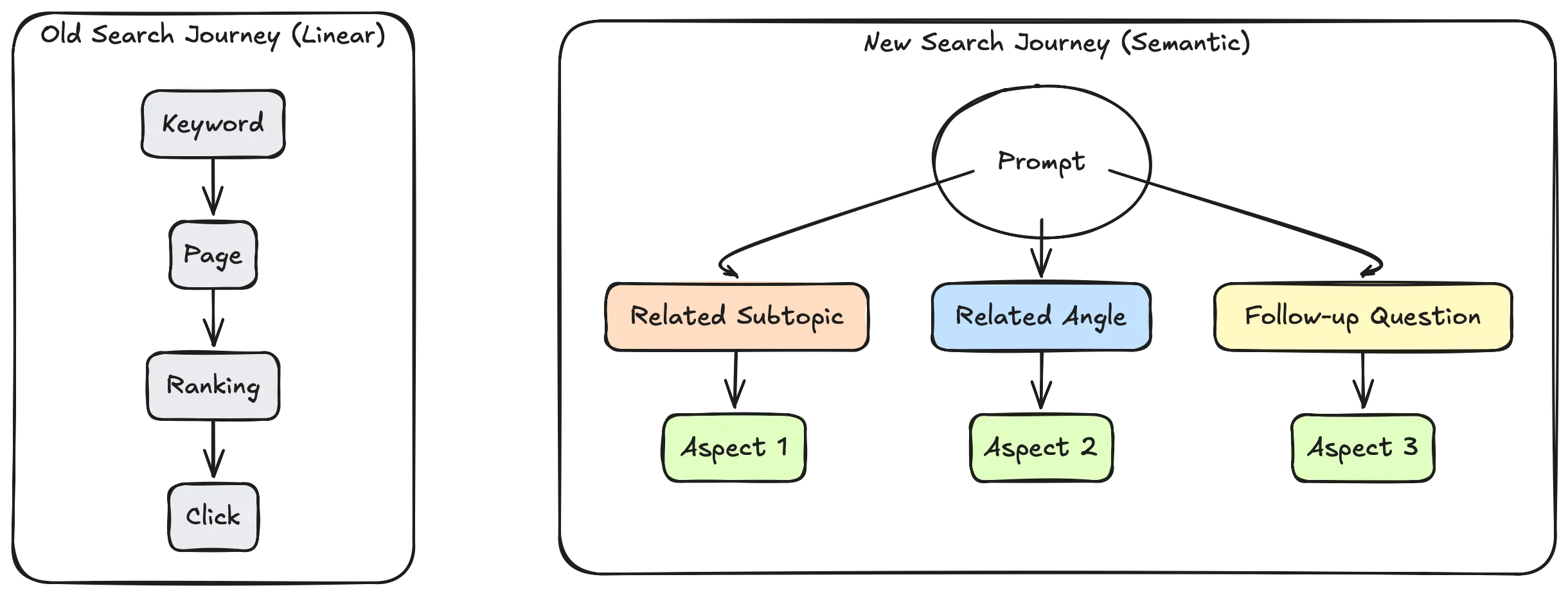
This is why I’ve been calling it the “long long tail.” AI doesn’t consume the web one query at a time. It reasons across webs of meaning. And the brands who show up repeatedly—across dozens or hundreds of small, connected entry points—are the ones that earn recognition.
What worked in the past (churning out generic, keyword-stuffed content) won’t even get you in the room today. Scale still matters, but now it has to be intentional scale: publishing highly specific, semantically connected content aligned to how people and AI systems actually search, ask, and learn.
Automation Flooded the Web. Intelligence Will Save It
Automation was supposed to democratize content. Instead, it created a tidal wave of noise.
As I often say: Content automation created a flood of noise. Intentional optimization is how brands rise above it.
The Content Boom No One Can Read
Over the past three years, the internet has undergone the largest content surge in its history. Not because demand spiked, but because production became effortless. Automated writing systems made it possible for anyone to publish at scale, and the result is an unprecedented expansion of pages that look like information but function more like residue.
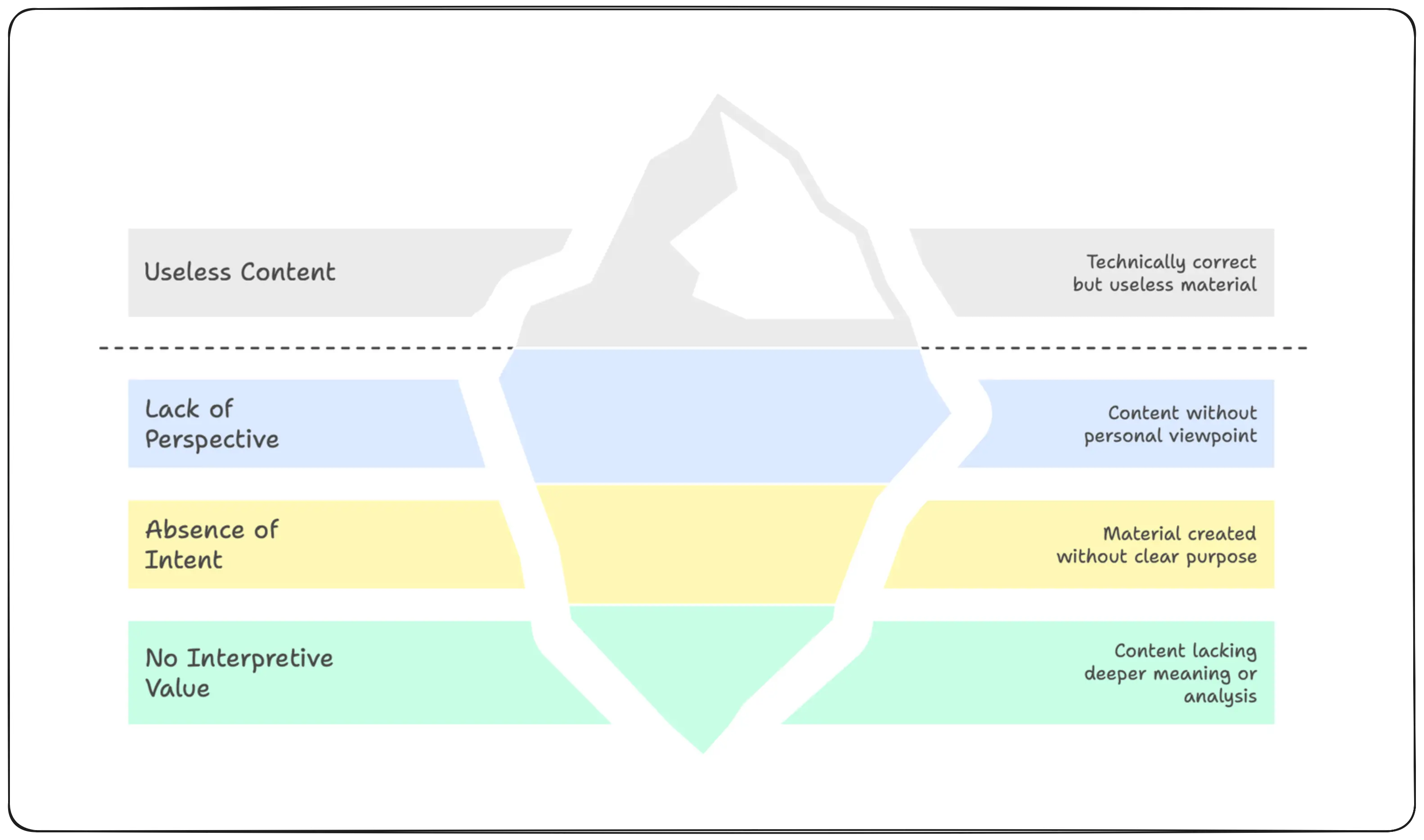
Much of this material is technically correct, yet practically useless: derivative listicles, lightly rewritten explainers, templated posts stitched together by the same training data. It’s content without perspective, intent, or interpretive value. In other words, material that adds volume but not understanding.
Search engines have begun to tune it out. Generative models often bypass it entirely. Users sense its emptiness long before they finish the first paragraph.
The problem isn’t quantity. The web has always been vast. The problem is that most of what’s being added no longer contributes meaningfully to collective knowledge.
In an ecosystem where AI systems are synthesizing ideas rather than indexing them, comprehension, not production, is the scarce resource. And only brands that provide it will survive the shift.
The Rise of Intelligent Optimization
The real opportunity is not to automate faster. It’s to think smarter. AI optimization means replacing guesswork with evidence:
What topics are connected?
What reasoning paths do LLMs follow?
What concepts matter for understanding and expertise?
What makes a piece of content “answer-ready” for AI systems?
It’s not about manufacturing more words. It’s about architecting knowledge in a way AI can interpret and trust.
From Keywords to Knowledge: What AI Search Really Understands
The fundamental shift in search is simple: AI doesn’t think in keywords. It thinks in meaning.
The New Language of Search
Generative AI understands:
Context, not repetition
Relationships, not isolated phrases
Meaning, not matching terms
It doesn’t ask, “Does this page include the keyword?”
It asks, “Does this page add value to the reasoning process?”
This is why brands with deep, well-structured topical ecosystems are suddenly outperforming sites with one or two “optimized” hero pages.
Authority in the Age of AI
Authority is no longer just backlinks and domain strength. It’s recognition.
Can AI systems:
Cite you?
Summarize you?
Pull your content into answers?
Treat your brand as a trusted node in their knowledge graph?
If not, rankings won’t save you. In AI-driven discovery, visibility depends on whether the machine genuinely understands who you are and what you know.
The New SEO Workflow: Intelligence Over Automation
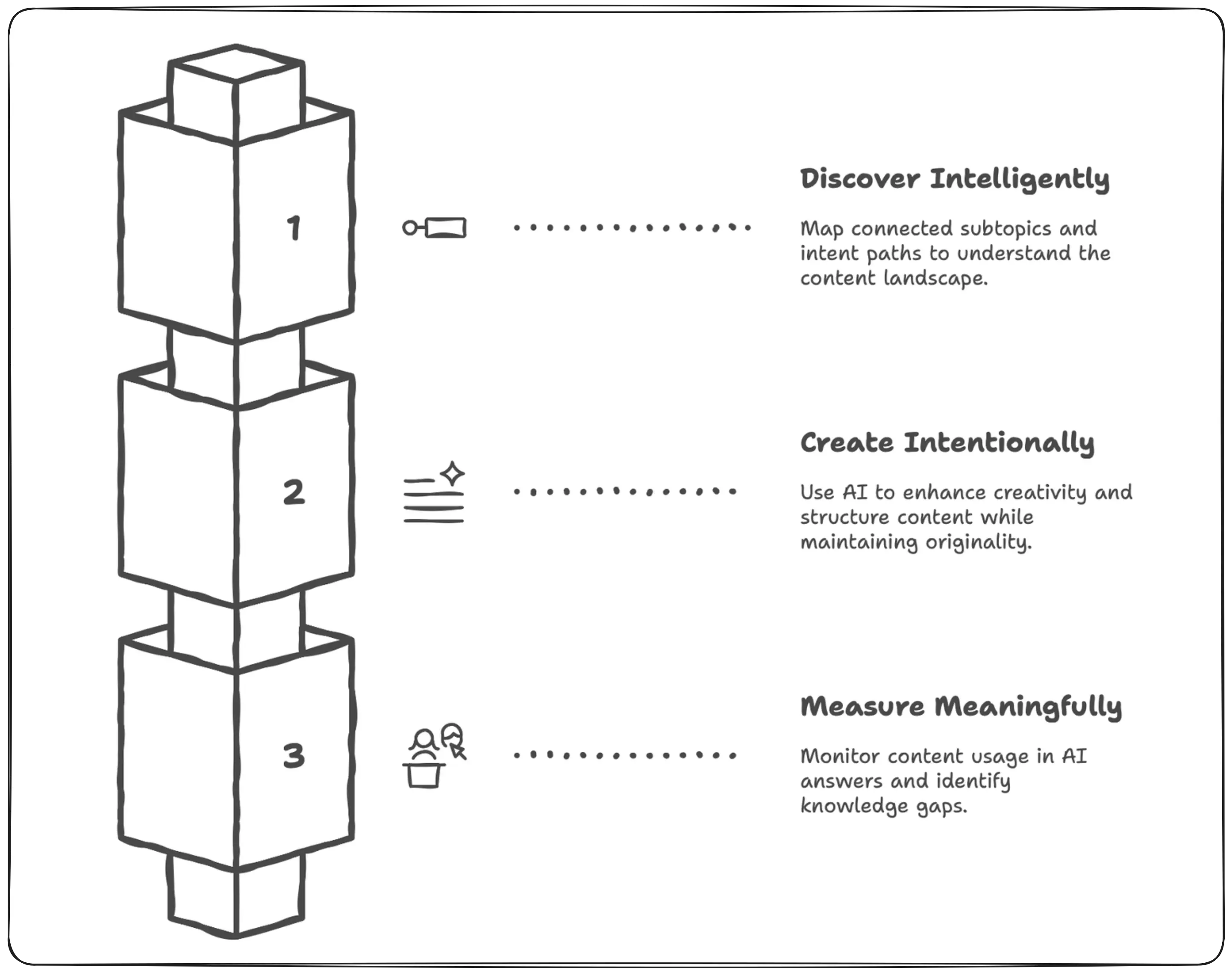
Winning teams aren’t producing more content. They’re producing smarter content. And they’re reengineering the entire workflow to do it.
1. Discover Intelligently
See the landscape before you write.
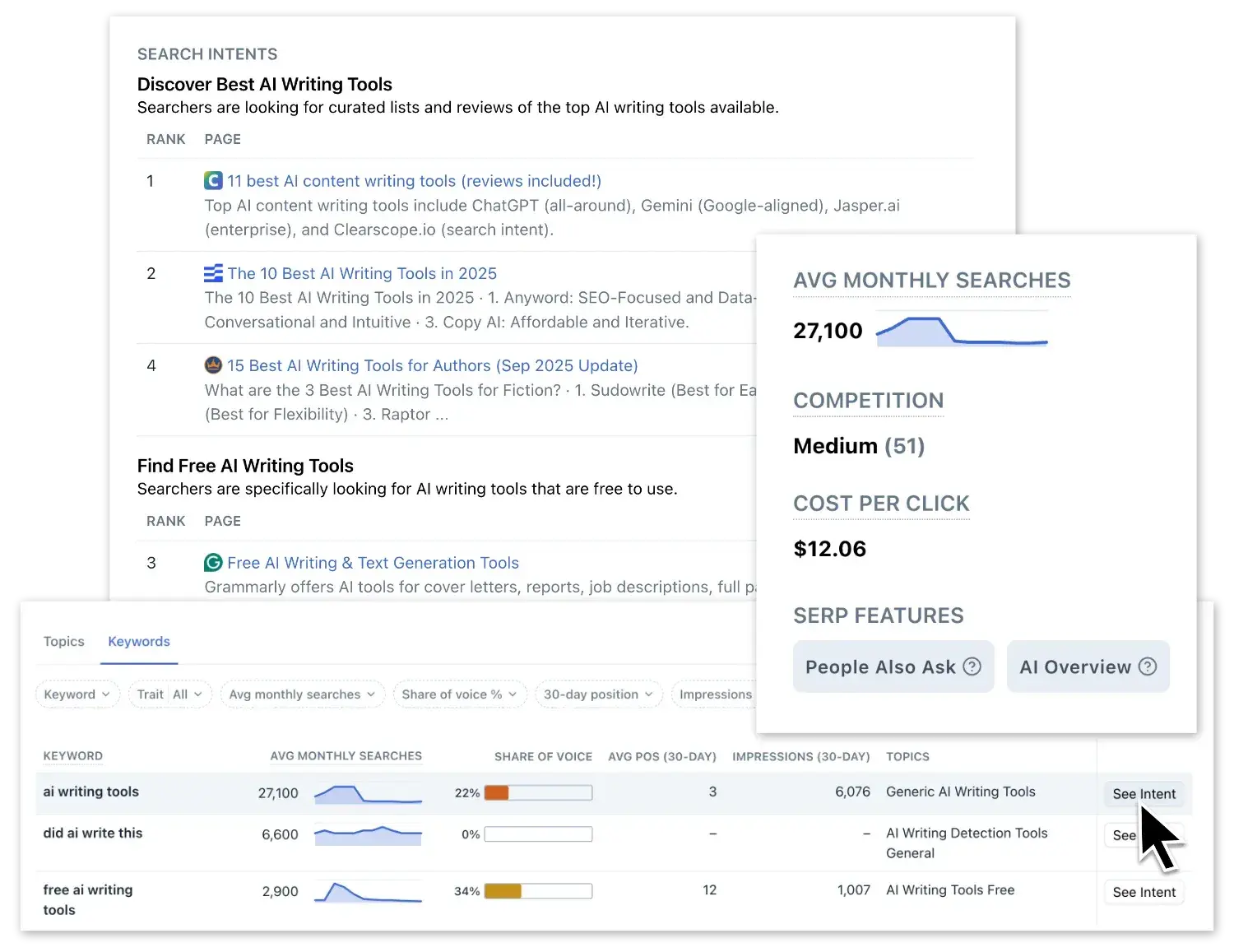
With Clearscope’s Topic Exploration and Tracked Topics, marketers can map:
Connected subtopics
Semantic clusters
Intent paths
Reasoning angles
Areas where AI shows misunderstanding or gaps
This is not keyword research. It’s intent-and-meaning research.
2. Create Intentionally
Use AI to enhance creativity, not replace it.
Draft with AI helps writers:
Structure answers the way AI prefers
Maintain originality and brand voice
Surface perspectives humans still express best
Build content that mirrors how users (and LLMs) explore ideas
It becomes the scaffolding, not the substitute.
3. Measure Meaningfully
Rankings are one dimension of reality. Recognition is another.
Clearscope’s Content Inventory lets teams monitor:
How content is used in AI answers
Where AI cites your brand
How you appear in summaries or reasoning paths
Which concepts AI trusts you with
Where your knowledge ecosystem has gaps
For the first time, marketers can measure visibility where searchers actually get their answers.
What Smarter Optimization Looks Like in Practice
Teams using Clearscope aren’t optimizing pages. They’re upgrading intelligence at every layer.
Example 1: From Keywords to Topics
A SaaS brand targeting “AI analytics” used Topic Exploration to uncover dozens of semantically adjacent angles—like model drift, data lineage, and interpretability—that competitors weren’t covering. Their content ecosystem became a magnet for AI recognition.
Example 2: From Writing Fast to Writing Right
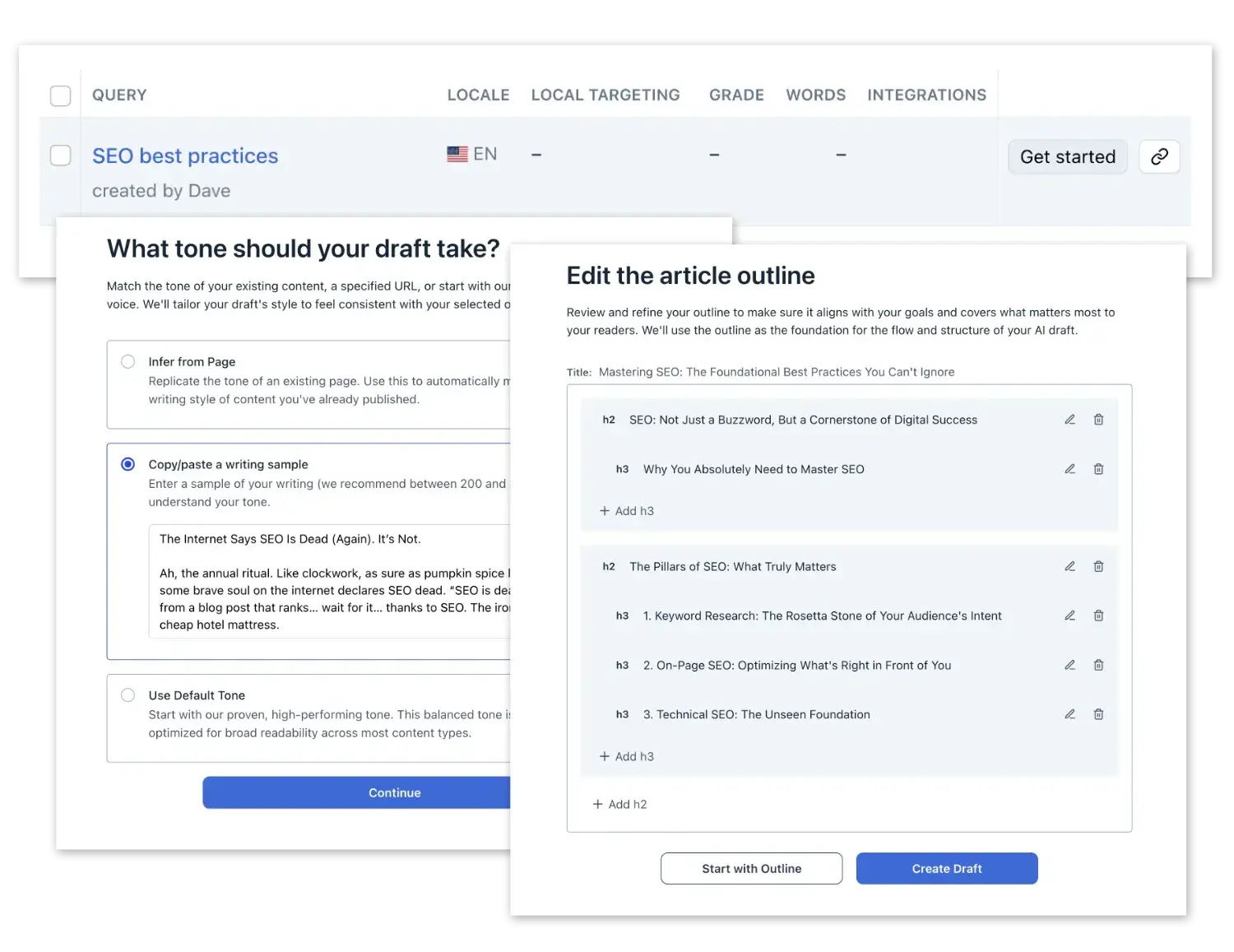
A content team used Draft with AI to generate a clear, structured first draft for a complex topic. Instead of starting from a blank page or relying on templated AI content, the team guided the model with their own insights and let Draft with AI handle the heavy lifting on organization, flow, and coverage. That foundation allowed writers to focus on nuance, originality, and expertise; resulting in content that was stronger, more coherent, and still unmistakably human.
Example 3: From Tracking Rankings to Tracking Recognition
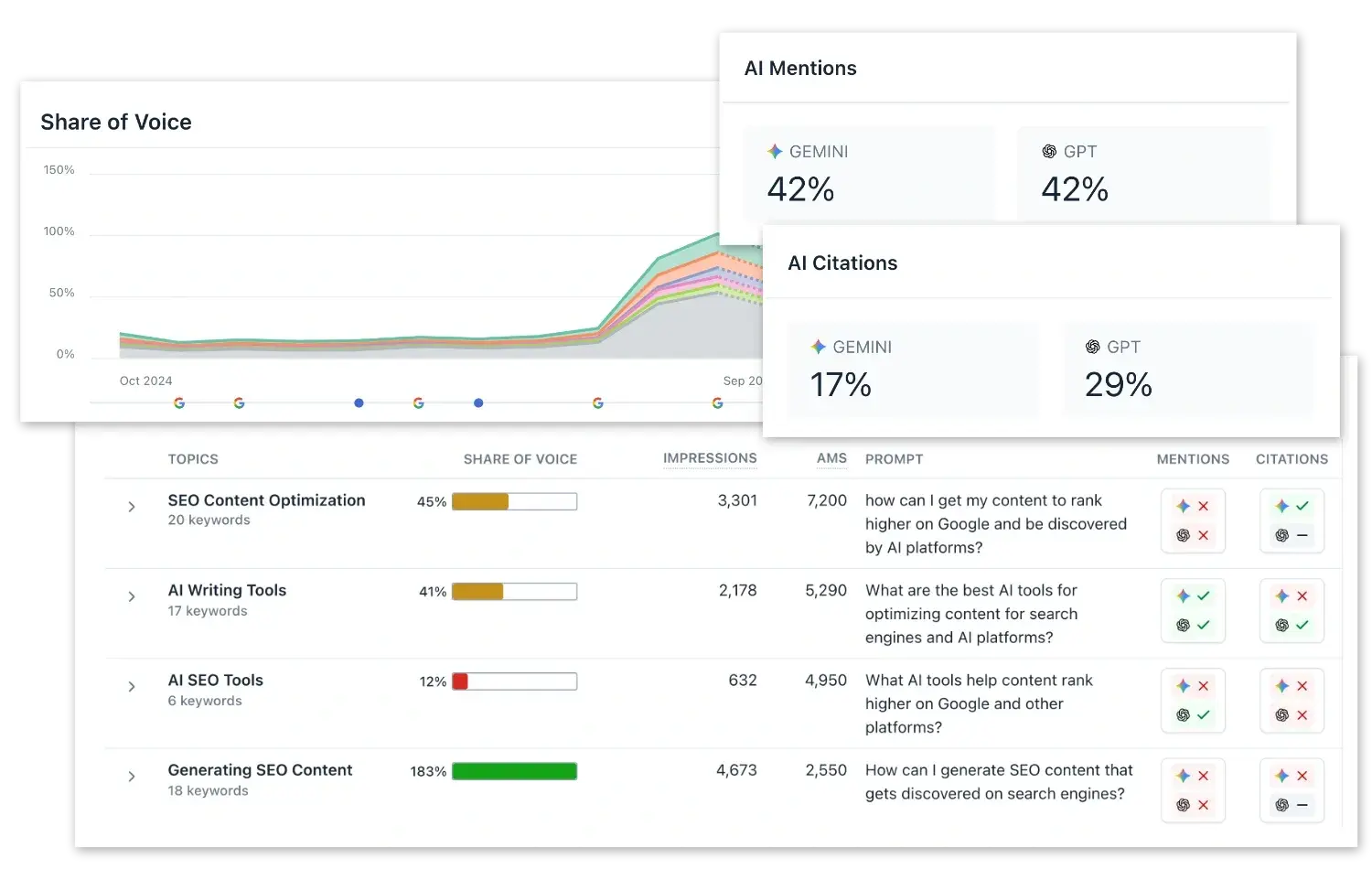
A publisher monitored AI citations across ChatGPT and Gemini, identified their highest-authority concepts, and doubled down on those topics. Visibility compounded not because they chased rankings, but because AI systems trusted them more.
The Future of SEO: Recognition Over Ranking
As generative systems mediate more of the discovery process, the idea of “ranking” captures less of what actually determines visibility. What matters now is whether a model incorporates your work into its understanding of a topic and whether it can draw on your explanations, definitions, and examples when forming an answer.
The question is no longer “Where do I appear?” but “Am I part of the system’s knowledge?” That shift demands clarity, breadth, and a body of content that reinforces itself across related concepts.
SEO is moving from competing for positions to earning a place in the model’s internal map of meaning. Only the latter creates durable visibility in an AI-first landscape.
Be the Brain, Not the Bot
Automation is cheap. Intelligence is rare.
The brands that win in the next decade will treat AI as an amplifier of human insight, not a replacement for it. They’ll invest in knowledge, not noise. They’ll build ecosystems, not pages.
And Clearscope will be here to make sure AI works in service of your strategy, not instead of it.
This is the future of SEO: Intentional, intelligent, interconnected.
Exactly the way discovery in the AI era demands.
The Future of SEO Is Conversational
Search is now a conversation. Learn how to get cited by ChatGPT, Gemini & Perplexity—and why AEO is the new SEO.
Introducing: Clearscope's AI Cited Pages Content View
Discover which of your pages AI engines cite most. Clearscope’s AI Citations Content View helps you track visibility and optimize for AI-powered SEO.
The Long Long Tail Is Here — and It’s Changing Everything
Discover why AI search rewards depth, connections, and semantic authority — and how the “long long tail” reshapes modern SEO and brand visibility.