The 2026 SEO Playbook: How AI Is Reshaping Search
Topic: Clearscope
Published:
Written by: Bernard Huang
SEO is entering the most significant transition since Google became the dominant search engine. The mechanics that defined the field — keywords, rankings, links, and blue-link SERPs — aren’t disappearing, but they’re no longer the only system that matters. The rise of AI-driven discovery has created a second, parallel layer of search: one where answers are generated, not retrieved, and visibility depends on whether intelligent systems understand, trust, and cite your expertise. In 2026, every brand will need to perform well in both environments.
The Split in SEO: Why 2026 Will Demand a New Approach

For the last twenty years, SEO has been defined by a relatively stable set of assumptions: people search using explicit keywords, search engines return a list of ranked results, and the job of SEO was to align content with those mechanics. But the arrival of large language models has introduced a second, parallel mode of discovery: one centered not on keyword retrieval but on conversational reasoning.
SEO isn’t disappearing. It’s diverging. One world still revolves around traditional rankings. The other is emerging inside AI-driven answers, where visibility depends on whether a system understands your content well enough to cite it.
By 2026, every brand will operate within both systems at once. The organizations that adapt to this dual reality first will shape how discoverability works for years to come.
Why 2026 SEO Will Look Nothing Like 2023

The foundations of search are shifting in ways that go far beyond algorithm updates. User behavior, discovery pathways, and the mechanics of how information is assembled are evolving simultaneously. As AI-driven interfaces reshape how people ask questions and consume answers, the assumptions that guided SEO in 2023 no longer hold. Understanding the scale of this transformation is the first step toward adapting to it.
The Generative Engine Era Is Here
The introduction of models such as ChatGPT and Gemini have fundamentally changed the way people seek information. Instead of forming queries around keywords, users articulate questions in natural language and refine them iteratively. The model is not simply returning results. It is synthesizing them.
This shift compresses the traditional search journey. What previously required multiple searches, clicks, and comparisons is replaced by a single conversational exchange. As these answers become more accurate and more deeply integrated into everyday tools, they begin to function as an alternative search layer, and one that sits upstream from the SERP entirely.
Google Is Still King… But the Rules Are Changing
Google remains the dominant gateway to information. However, it no longer defines the entire landscape of discovery. Search Generative Experience (SGE) marks Google’s own acknowledgement that retrieval alone is not sufficient for modern users.
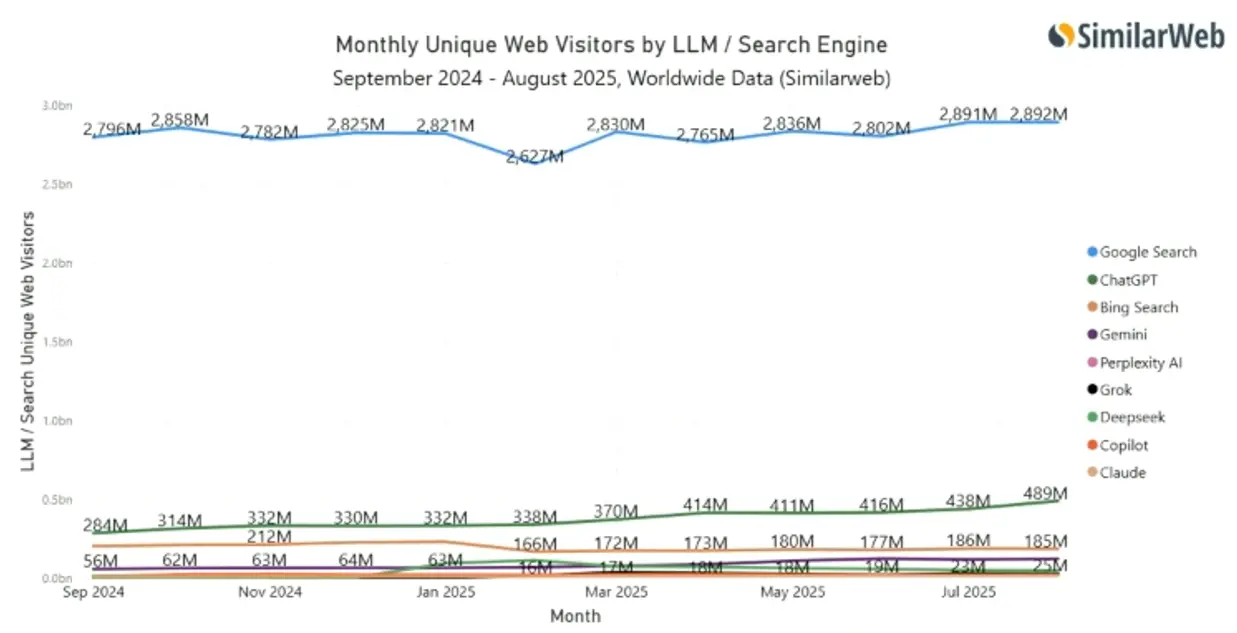
Meanwhile, people are increasingly routing certain types of questions through other interfaces: Perplexity for research, Bing and ChatGPT for synthesis, Amazon for product discovery, Reddit for experience-based insight.
Search behavior is fragmenting. Queries are being redistributed across multiple entry points, each with its own logic for how answers are constructed. The result is a world where visibility depends on more than a position in Google’s top 10. It depends on whether your expertise is represented wherever the user begins their exploration.
The Old SEO Playbook Doesn’t Work Anymore
For years, SEO success followed a familiar pattern: target keywords, optimize pages, build authority, and climb the rankings. That framework is now insufficient. AI systems draw from a wider contextual field than any individual query can signal, and ranking well in one environment does not guarantee visibility in another. The traditional playbook hasn’t become wrong, just incomplete. Modern SEO requires a more multidimensional approach.
Keywords Still Matter, But Not in the Same Way
In the classic SEO model, keywords served as a proxy for user intent. But generative systems infer intent directly. They interpret meaning, context, relationships, and patterns, drawing on a wider semantic field than any individual query provides.
As a result, matching a keyword may help you rank, but it does not guarantee you’ll be included when an AI system formulates an answer. The content must align with the broader conceptual space the model associates with the topic.
Rankings Are Only One Signal
For two decades, rankings functioned as the primary barometer of SEO success. That assumption no longer holds. LLMs rely on a blend of signals that extend beyond the mechanics of on-page optimization: the consistency of your expertise across topics, whether other sites reference you, whether your content aligns with established consensus, and how well your explanations map to the reasoning pathways models use to answer related questions.
Visibility, in this new context, becomes a matter of citation and inclusion, not merely position.
Answer Engine Optimization Is the New SEO
The emergence of generative systems has created a parallel form of discoverability, one in which visibility is determined by an AI model’s internal understanding rather than a list of ranked results. In this world, being findable means being interpretable: models must be able to parse your content, map it to related concepts, and use it within an answer. This shift requires marketers to think beyond keywords and consider how their knowledge is represented within the reasoning processes of AI.
From Search Engine Optimization to Conversational Discoverability
Traditional SEO was built on the premise that information retrieval produces a ranked list of links. AI-driven discovery is different. It operates inside a conversation, where the system constructs an answer by weaving together content it trusts and understands at a structural level.
This is what we call conversational discoverability: the ability for your content to appear not as a result, but as part of the reasoning behind an AI-generated answer.
To perform well in this environment, your content must be interpretable by models in a way that mirrors how humans process expertise: clarity, logic, structure, breadth, depth, and demonstrated knowledge of adjacent concepts.
What AI models “see” is not what search engines rank. Optimizing for one no longer guarantees inclusion in the other.
The 2026 SEO Strategy Blueprint
The brands that thrive in this split ecosystem will be those that build not just pages, but knowledge. Below are the foundational strategies shaping that shift.
1. Own the Long Long Tail
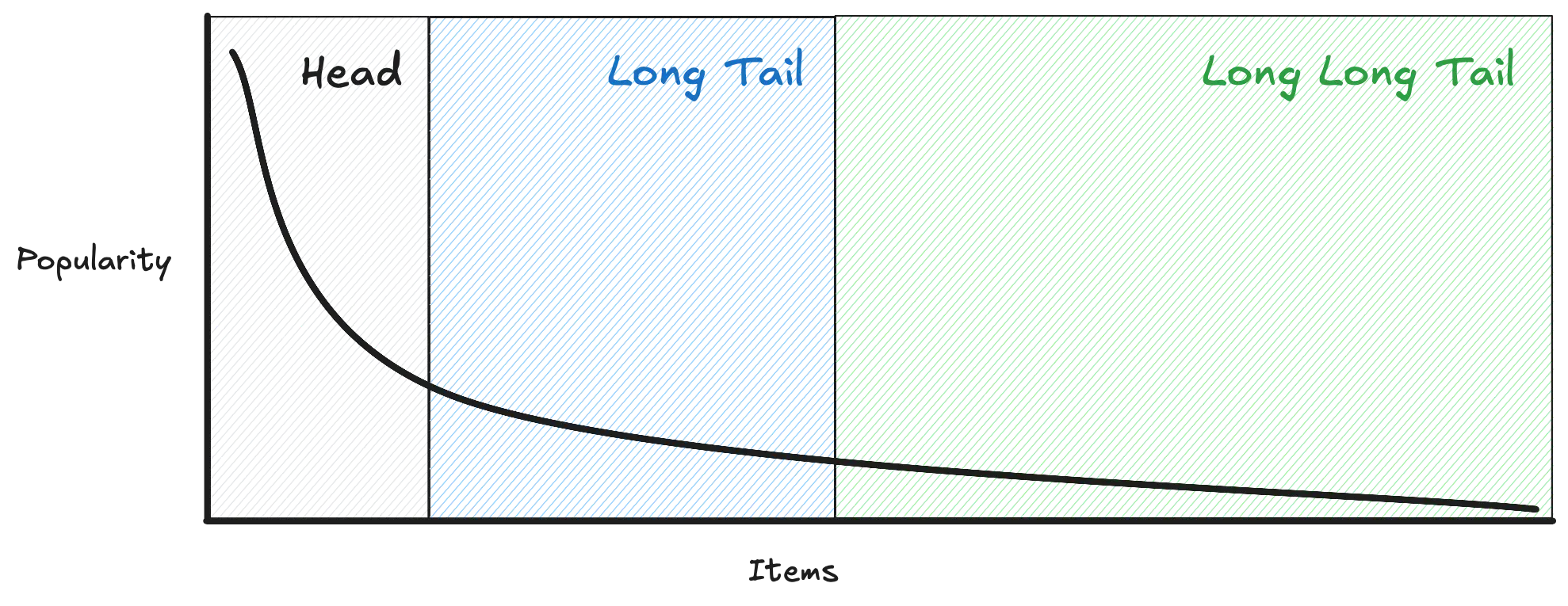
The long tail concept helped define SEO for a generation: instead of competing for one high-volume keyword, brands created content for thousands of low-volume ones.
The long long tail goes further.
AI models evaluate not just individual pages, but the network of associations surrounding a topic. To be selected as a trusted source, you need to demonstrate breadth across all the sub-questions and depth across the nuances.
This is where Clearscope’s “good enough at scale” approach becomes essential. Instead of producing a single optimized page, you create a coverage map: a set of interconnected articles that reflect the full terrain of a topic.
2. Build Topical Depth and Breadth
Authority no longer comes from length; it comes from completeness.
Clearscope’s Topic Explorer helps marketers understand the semantic terrain around a concept: what people ask, how ideas interrelate, and where gaps exist in your coverage.
Producing content that maps to this landscape is how you demonstrate the comprehensiveness AI systems reward.
3. Optimize for Search Intent, Not Just Search Terms
Keyword tools show what users type. Intent reveals what they actually mean.
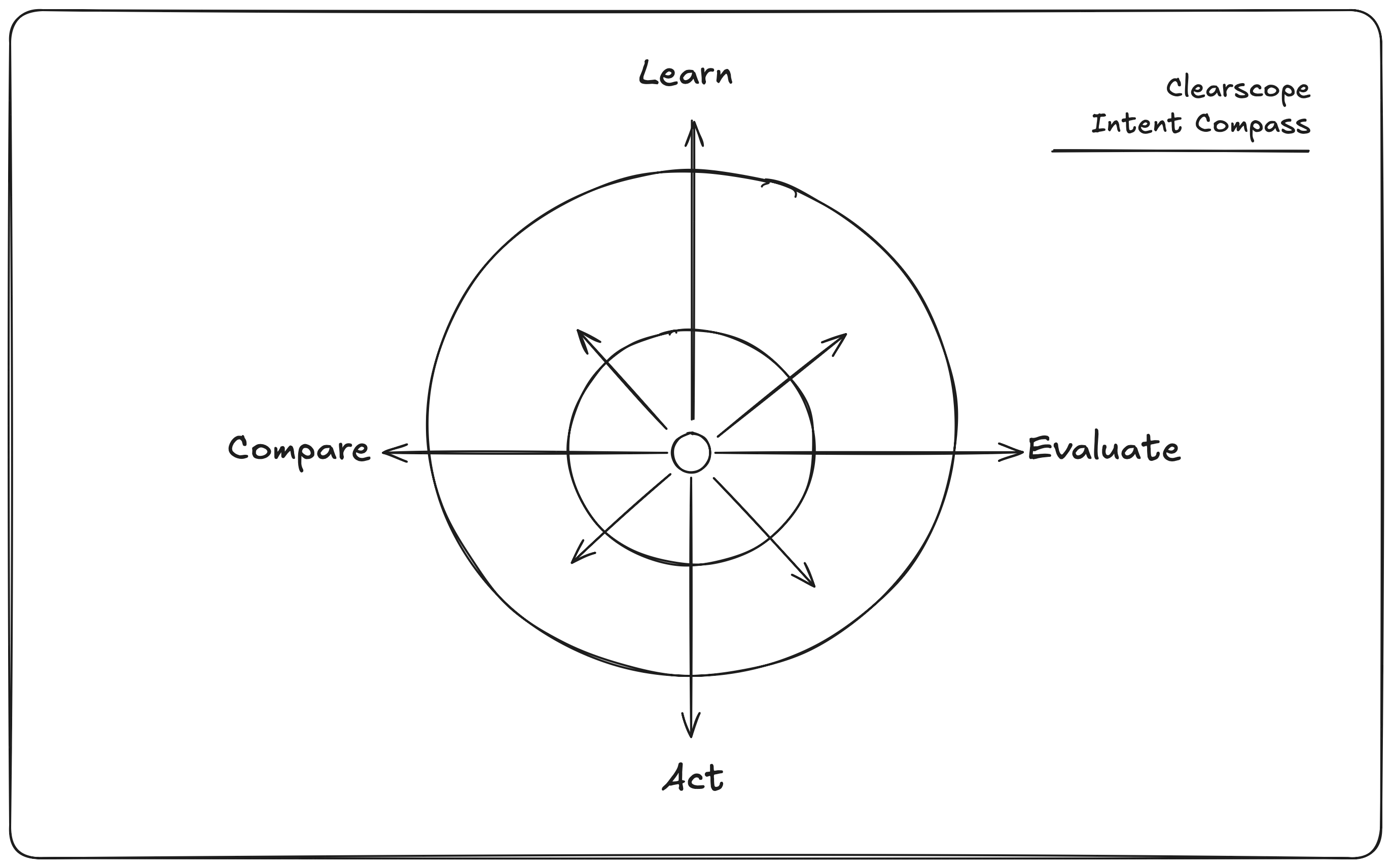
Clearscope’s Search Intent analysis interprets the underlying purpose behind a query, enabling writers to craft content that aligns with human reasoning patterns. In an AI-first search environment, understanding intent is not optional. It is the foundation of relevance.
4. Be Citable in AI
AI systems cite and summarize from sources they trust. To become one of those sources, your content must be structured in a way that models can parse and reuse: clear sectioning, explicit claims, evidence, definitions, and explanations that map cleanly to related concepts.
A webpage is not merely a document. In the AI era, it is a data source for reasoning.
5. Track and Iterate AI Visibility
Traditional analytics measure performance within search engines.
AI visibility measures performance within answers.
Clearscope’s Tracked Topics identifies where your brand appears within AI-generated summaries across engines — a new category of insight that shows whether your expertise is being recognized by the systems shaping modern discovery.
The Future Is AI-First, But Human-Led
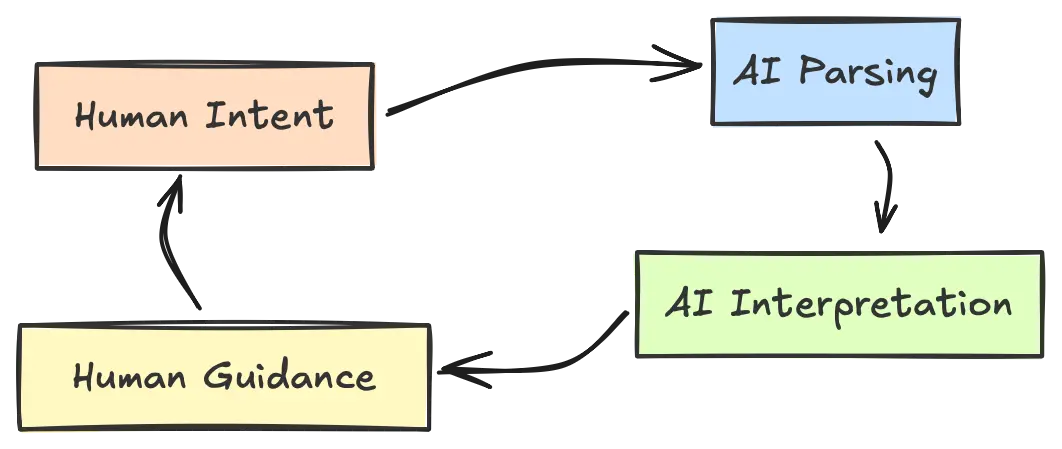
Despite the rapid evolution of technology, the principles of good content haven’t changed: clarity, insight, structure, and empathy for the user still matter more than anything. AI can accelerate production, but it cannot replace the human ability to interpret context, identify what’s meaningful, and articulate ideas with intention. The future of SEO belongs to teams who can pair human judgment with AI-powered intelligence; and who understands how these systems increasingly shape what the world sees.
Combining Human Insight with AI Precision
We are entering an era where content must be created with both human readers and AI interpreters in mind. The role of the marketer does not shrink in this environment. It becomes more strategic. AI accelerates production, but humans define clarity, reasoning, and narrative cohesion.
The organizations that pair human intention with AI intelligence will outperform those that rely solely on automation.
It’s Time to Level Up
Search is evolving faster than at any point since the early 2000s. The companies that adapt will gain an enduring advantage, because they will be the ones shaping the datasets that future AI systems learn from.
The 2026 SEO playbook has already begun.
Clearscope was built for this shift. And the brands that embrace it early will define the next era of discoverability.
AEO vs. SEO: What’s the Real Difference (and Why It Matters Now)
Stop confusing AEO with SEO. Learn what sets Answer Engine Optimization apart and how to future-proof your strategy for AI-powered search.
The Long Long Tail Is Here — and It’s Changing Everything
Discover why AI search rewards depth, connections, and semantic authority — and how the “long long tail” reshapes modern SEO and brand visibility.
The Future of SEO Is Conversational
Search is now a conversation. Learn how to get cited by ChatGPT, Gemini & Perplexity—and why AEO is the new SEO.